


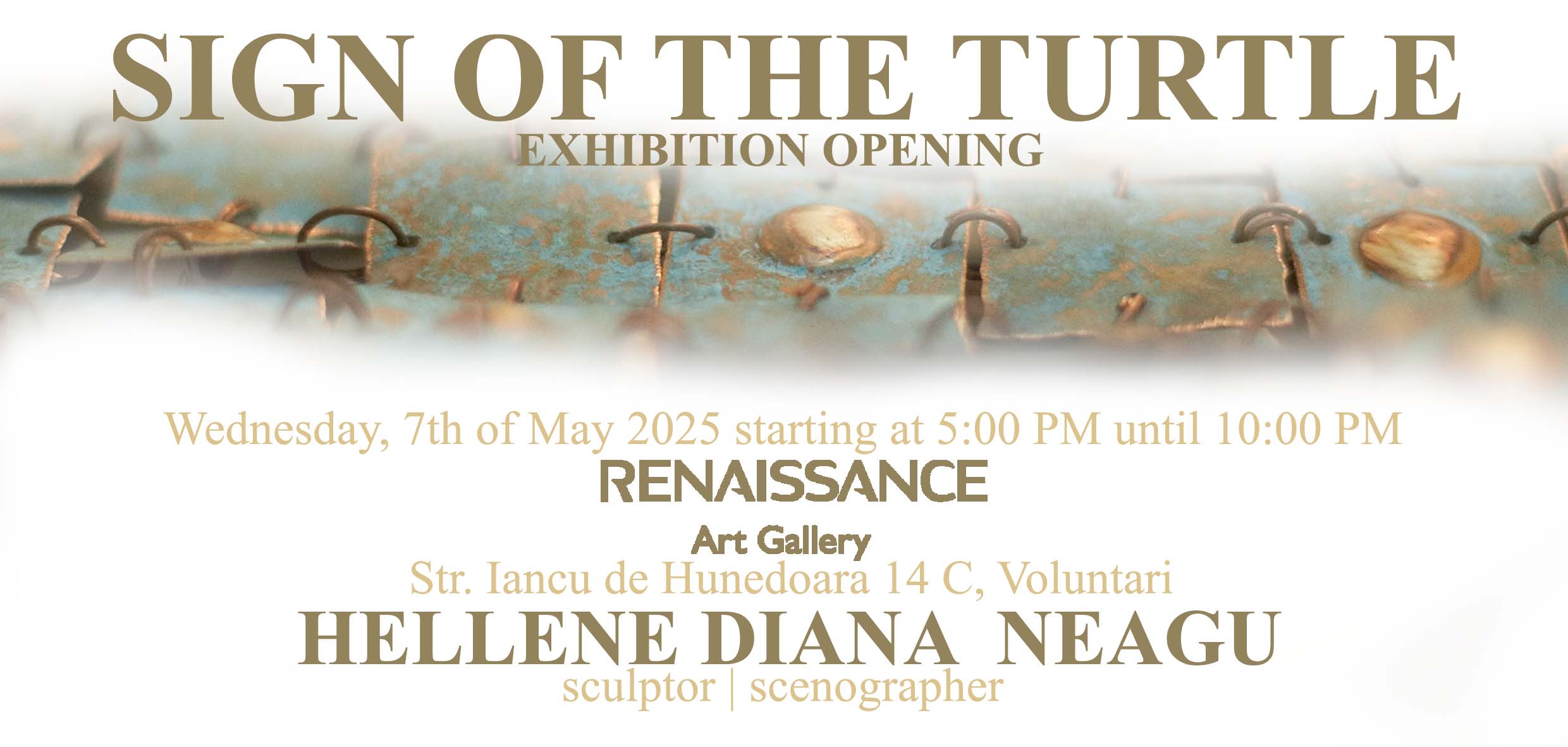
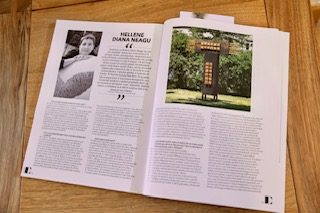
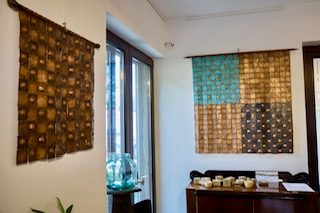
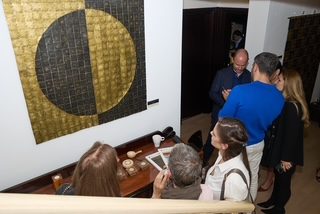
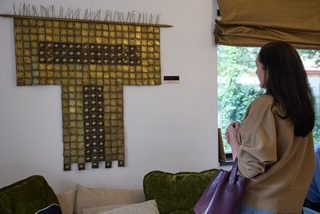

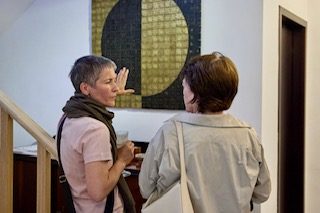
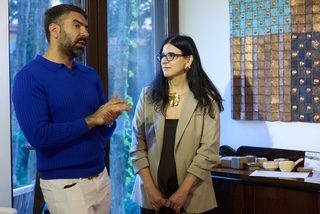


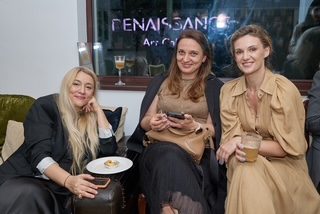

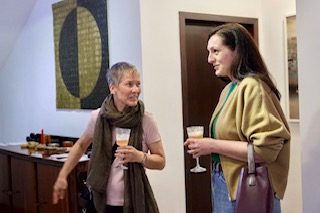
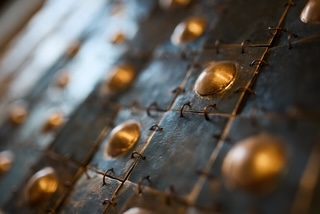
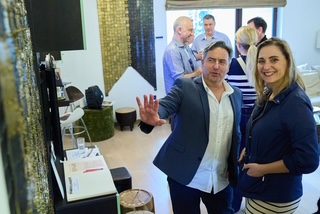

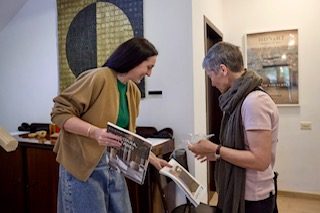
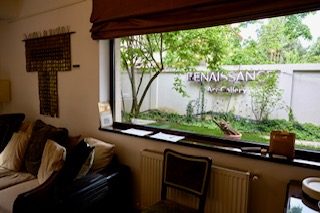
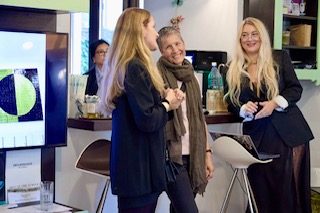
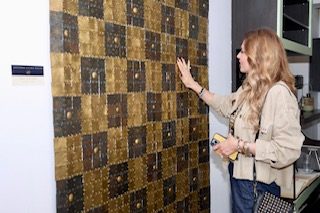


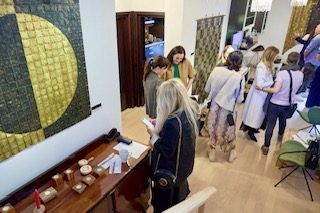
Exhibited works at Renaissance Art Gallery part of exhibition The Sign of the Turtle by Hellene Diana Neagu- metal sculptor artist:7 May 2025 -1 June 2025
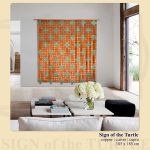
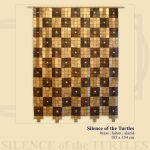
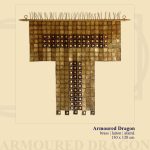
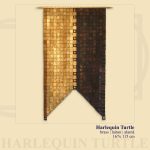

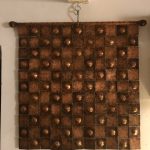
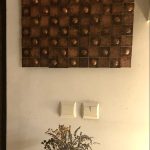
“Sign of the Turtle” by HDNaRT Hellene Diana Neagu metal sculptor artist,
curated by Dr. Arh. , designer, curator, artist Iulia Toader- Founder of Fundatia Juxta
at Renaissance Art Gallery
Romania București- Voluntari, 07 May 2025
The artworks exhibited are part of the private collection HDNaRT conceived and realized along the way, started in 2006.
The time has come to release my collection simply titled “SIGN OF THE TURTLE “, a collection of beautiful experiences contained in each piece in part, says artist Hellene Diana Neagu.
Right now,RENAISSANCE Art Gallery represents the space and even the right time to delight you!
So, welcome to the TURTLES REALM , where The Human being is living already in the state of equilibrium and eternal peace!🐢
HDNaRT Hellene Diana Neagu
The Sign of the Turtle at Renaissance Art Gallery
07.05.2025
Curating discourse by Dr. Arh. Iulia Toader
First of all I would like to note the predilection of our hostess Oana Vișoiu (the owner of the Renaissance gallery with whom I have the pleasure to collaborate again) for subjects in the biological sphere, of life seen at a spiritual, neuro-vegetative level, cut from the chaos of the search for reason, politics, ethics, and deeply rooted in spirituality manifested in nature and the universe. The last exhibition I happily curated centered on the poetry of botanist Maria Costake, and earlier last year, the plasticity of biological landmarks sublimated in the fairy-tale art of Ammar Alnahhas.
We are fortunate for this consistency, and I invite you to look at the objects of great artistic refinement on display today independent of artist, location, meaning and even time. It’s an interesting adventure, and I make this invitation because the artist Hellene Diana Neagu herself has confessed to me that she is in fact on a perpetual quest for purity, harmony, serenity.
Naturally, given the spiritual thread evident in the works, my first temptation was to interpret the body of works in their individuality, in the key of Jean-Luc Marion’s theory of donation: “The idol depends on the gaze it satisfies, for if the gaze did not wish to satisfy itself in the idol, the idol would have no dignity for it. The gaze strains to see the divine, to see it bringing it into the field of the visible.” The French philosopher has a very interesting interpretation of the art object as idol, connected also to the ancestral relation of art to religion.
This branch of philosophy concerned with donation (in the sense of giving) which has at its center the figure of Jean-Luc Marion, with a particular theory about a certain type of phenomenon called saturation, will provide the framework for the type of perception we have in mind when we speak of the present collection. A work of art signed by Hellene ”gazes at us with intensity, creating an exclusive and enveloping connection, capturing our full attention in such a way that nothing will escape the vortex of searching admiration, uniquely directed towards its essence. This is an essence that radiates so intensely that it melts the artist’s personality and any resemblance to immediate reality. The essence eliminates from the ambience any rival that would compete for attention, attaining “such an intensity that it often saturates the capacity (…) of vision, and even exceeds that capacity”. Marion calls this kind of essence – idol.”
,, Name your idol and you will know who you are.” [In Excess, p.61] A kind of know thyself. A kind of escape room at the end of which we finally find our true self – the soul.
I have gone beyond this path of deciphering because, although satisfying, it does not resonate with the harmony through the lack of hierarchy of the artist’s plastic universe. This self-sufficient and unifying primordial water that nourishes the concepts and abstractions of Hellena’s art also has another valence that donation theory eludes.
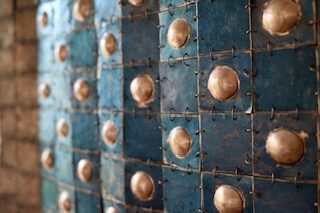
Thus, an immersion in the at first glance intricate world of pieces painstakingly joined and crafted from bronze-like metals, each one cut, each one skillfully beaten, rounded, tilted together, pressed and chained, leads one to think of music. So I think of looking at this kind of art as solid music, with its rhythms, its pauses, its tempo, like andante, allegro, allegro poco mosso. It’s I think the only way I can relate to them, because music, this immaterial art, whose physical presence cannot be possessed but only experienced, seems to me to have the same essence as Hellena’s art, which although you may be lucky enough to acquire in the physical world, only becomes real when you decide to let go a little of your consciousness in space-time and begin this immersion into the dimension of non-existence.
I say non-existence not in Benatar’s sense of aspiring to the absence of pain, but in the sense revealed by the artist herself, of the absence of the needs, pathos, ethos and logos specific to existence in the rhetoric of the complicated material world.
The artist has found this counterpart, the “tortoise”, to express the state that she wants to convey in her art. Let us remember that the open composition panels are all the more impressive together, encircling us, making us each feel wrapped up in this lacy and powerful shell. The feeling of being surrounded, of being immersed in Hellena’s art must, to do it justice, be treated with the same reverence with which we allow ourselves to be surrounded by Beethoven’s piano concertos, for example.
When we perceive them as solid music, we see the association with architecture. Goethe wrote in the 18th century, ‘Music is liquid architecture and architecture is frozen music’.
But in Hellena’s creation this meaning is sublimated and we can speak of an architecture of harmony. Of a peaceful, patient, pacifist and enlightened way of her art to exist in complete non-combativeness with the surrounding world, but also in complete absence of desire, in such a way that I detect a floating, a suspension in an abstract space of ideal balance between the material and the spiritual. A return to those unknown origins of harmony towards which all people tend, through the search for their own happiness, and which in the artist’s opinion can be found in withdrawing from the everyday and accessing a state of refined, noble, uplifting simplicity.
From these abstract and objective spiritual heights we can finally analyze the title of the collection, the sign of the Turtle. The purging of the biological and the mathematical perception of the circle inscribed in the square that the artist speaks of when she explains the choice of the Turtle as the seal for her spectacular work, led me from the outset to the landmark of the problem of the quadraticity of the circle, demonstrated as unsolvable by Lindemann. The mystery of artistic construction springs from here and I invite you once again to experience this art as an impossible music. The circle and the square no longer contain themselves, they intersect and repetitively deduplicate in a subtle interplay that exposes and sharpens the visual, leaving echoes in the subconscious, just like a melodic line.
Hellena’s harmonies, whether intersections and crosses, squares and circles, flashes and shadows, are her inner music that here, miraculously, we can see.